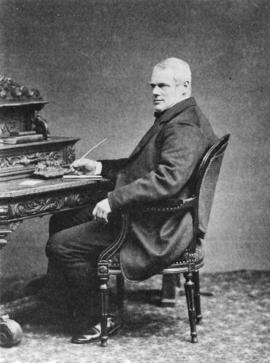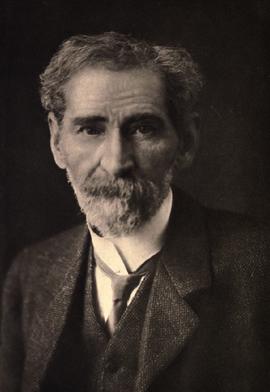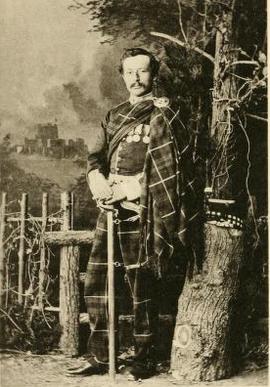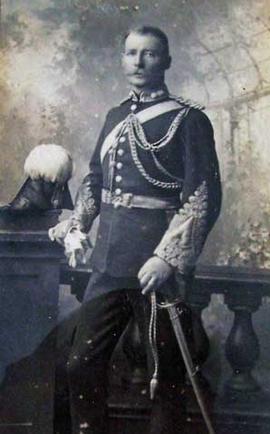
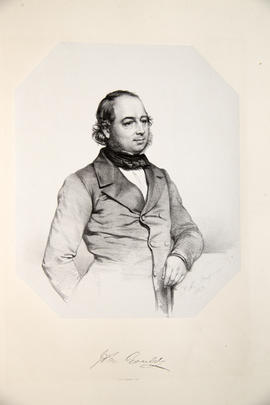
John Gould was an English ornithologist. He published a number of monographs on birds, illustrate by plates produced by his wife, Elizabeth Gould, and several other artists including Edward Lear, Henry Constantine Richter, Joseph Wolf and William Matthew Hart. His identification of the birds now nicknamed 'Darwin's finches' played a role in the inception of Darwin's theory of evolution by natural selection. Gould's work is referenced in Charles Darwin's book On the Origin of Species
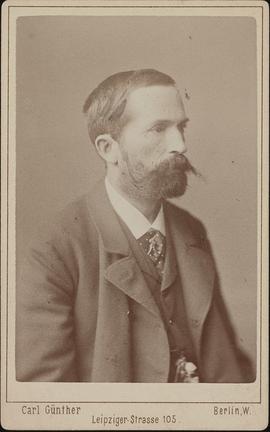
Friedrich Hermann Otto Finsch was a German ethnographer, naturalist and colonial explorer. He is known for a two-volume monograph on the parrots of the world which earned him a doctorate. He also wrote on the people of New Guinea and was involved in plans for German colonisation in Southeast Asia. Several species of bird (such as Oenanthe finschii, Alophoixus finschii, Psittacula finschii) are named after him as also the town of Finschhafen in Morobe Province, Papua New Guinea and a crater on the moon
John Henry Gurney was an English banker, amateur ornithologist and Liberal Party politician of the Gurney family. Gurney published a number of articles in The Zoologist on the birds of Norfolk. He also commenced a collection of birds of prey. In 1864 he published Part I. of his Descriptive Catalogue of this collection, and in 1872 he edited The Birds of Damara Land (Damaraland, South-West Africa) from the notes of his friend Charles John Andersson. Between 1875 and 1882 he produced a series of notes in The Ibis on the first volume of the Catalogue of Birds in the British Museum, and in 1884 brought out a List of Diurnal Birds of Prey, with References and Annotations. The archives of Cambridge University Museum of Zoology contains five volumes of correspondence between Alfred Newton and Gurney, who was a founding member of the Norfolk Naturalists Trust
Karel Johan Gustav Hartlaud was a German Physician and Ornithologist. Hartlaub was born in Bremen, and studied at Bonn and Berlin before graduating in medicine at Göttingen. In 1840, he began to study and collect exotic birds, which he donated to the Bremen Natural History Museum. He described some of these species for the first time. In 1852, he set up a new journal with Jean Cabanis, the Journal für Ornithologie. He wrote with Otto Finsch, Beitrag zur Fauna Centralpolynesiens: Ornithologie der Viti-, Samoa und Tonga- Inseln. Halle, H. Schmidt. This 1867 work which has handcoloured lithographs was based on bird specimens collected by Eduard Heinrich Graeffe for Museum Godeffroy. A number of birds were named for him, including Hartlaub's Bustard, Hartlaub's Turaco, Hartlaub's Duck, and Hartlaub's Gull
William Henry Hudson (known in Argentina as Guillermo Enrique Hudson) was an Anglo-Argentine author, naturalist and ornithologist. Hudson spent his youth studying the local flora and fauna in Argentina while publishing his ornithological work in the Proceedings of the Royal Zoological Society. He produced a series of ornithological studies, including Argentine Ornithology (1888-1899) and British Birds (1895)
Leonard Howard Loyd Irby was a British ornithologist and army officer. He specialised in the study of birds in southern Iberia
Colonel William Vincent Legge was an Australian soldier and an ornithologist who documented the birds of Sri Lanka. Legge's hawk-eagle is named after him as is Legge's flowerpecked and Legges Tor, the second highest peak in Tasmania. He was a member of the Zoological Society of London
August von Pelzeln was an Austrian ornithologist. He studied at the University of Vienna, later working as an assistant under helminthologist Karl Moriz Diesing in the Hof-Naturalien-Cabinet from 1851. In 1857 he acquired curatorial duties formerly held by Johann Jakob Heckel, and subsequently became in charge of the bird (1857) and mammal (1869) collections. He worked on the birds collected by Johann Natterer in Brazil (343 species)
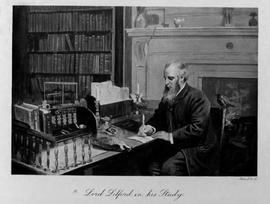
Thomas Littleton Powys, 4th Baron Lilford was a British aristocrat and ornithologist. He was one of the eight founders of the British Ornithologists' Union in 1858, and its president from 1867 until his death. He was also the first President of the Northamptonshire Natural History Society. He travelled widely, especially around the Mediterranean and his extensive collection of birds was maintained in the grounds of Lilford Hall. Until 1891, his aviaries featured birds from around the globe, including rheas, kiwis, Pink-headed ducks and a pair of free-flying Bearded vultures. He was responsible for the introduction of the Little owl into England in the 1880s. He wrote about birds including Notes on the Birds of Northamptonshire and Neighbourhood (1895) and Coloured Figures of the Birds of the British Islands, which was completed by Osbert Salvin after his death. A species of European lizard, Podarcis lilfordi, is named in his honour
George Dawson Rowley was an English amateur ornithologist who published a series called Ornithological Miscellany in which he reprinted notes on bird studies of the time