Founded in 1826, the Zoological Society of London (ZSL) is an international scientific, conservation and educational charity whose mission is to promote and achieve the worldwide conservation of animals and their habitats. It runs the Institute of Zoology, conservation projects in more than 50 countries, and two Zoos, ZSL London Zoo and ZSL Whipsnade Zoo
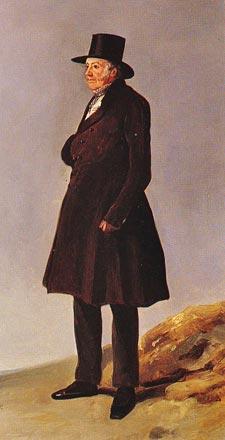
Charles Spooner was born in 1806. He graduated from the Royal Veterinary College in 1829 and was appointed as veterinary surgeon to ZSL - a post he held until 1833. His job title was 'medical attendant' and he was paid £60 per annum. For this he has to attend the gardens three times a week, more often if required, and prescribe and examine all animals and keep a record of this work.
William Youatt was born in 1776, the son of a non-conformist minister. Youatt was appointed medical superintendent at the Gardens on a salary of £100 a year in 1833. He attended the gardens on a part time basis on a Monday and Thursday, and was expected to be ready to attend if any emergency arose, and to perform post mortems on the animals. Youatt had a practice in Wells Street, and founded the publication Veterinarian. He also lectured at London Veterinary College (now RVC). He continued in this post until his death is 1847.
Alfred Henry Garrod was born in London in 1846. He was the eldest child of Sir Alfred Barring Garrod, an eminent physician of the time. He studied medicine at Kings College London and was elected to St John's College, Cambridge in 1870. He started work as the prosector/anatomist at ZSL in 1871 and held this position until his death in 1879. He was especially interested in the anatomy of birds.
Robert Thomson Leiper was born in 1881in Kilmarnock, Scotland. He studied medicine at the University of Glasgow. His main focus of study was helminthology - the study of parasitic flatworms. He founded the Journal of Helminthology in 1923. He was the first professor of helminthology at the University of London and director of these studies at the London School of Hygiene and Tropical Medicine - a post he held from 1905 until his retirement in 1947.
Pathologist at ZSL London Zoo
William Charles Linnaeus Martin was an English naturalist. He was the son of English naturalist and palaeontologist William Martin (1767-1810), who named him after the taxonomist Carl Linnaeus. Martin was the curator of the ZSL Museum from 1830-1839. After this he was a prolific natural history writer, authoring many books and articles. Forty-five of his papers appear in the Proceedings of the Zoological Society.
Francis Martin Duncan was born in 1873. He was ZSL Librarian and Clerk of Publications from 1919, taking over from previous librarian Henry Peavot's widow Maude who stepped into the role after Henry was killed during the war in France in 1917.
Duncan was also a skilled photographer, and is noted as having been a pioneer of applying the cinematograph to the movements of invertebrate and microscopic animals. He is also noted as having contributed greatly (along with his assistant) to the preparation of a new library catalogue and a geographical card catalogue.
He died in 1961
Anthony Salvin was an English architect, known mainly for house design in Tudor style and the restoration of a number of castles and churches. He was born in 1827 in Sunderland Bridge, County Durham to General Anthony Salvin Snr, and his second wife Elizabeth Mills. He was educated at Durham School, and for a time he worked under the Scottish architect John Patterson. He first moved to London in 1821 and is said to have worked in the office of John Nash. He was married in 1826 to his cousin Ann Andrews Nesfield with who he had 6 children, including the naturalist Osbert Salvin. He was awarded the royal gold medal from RIBA in 1863. He died in 1881 at his house Hawksfold in Fenhurst, Sussex.
The Zoological Club, connected with ZSL, was founded in 1866 by HW Bates, WH Flower, TH Huxley, PL Sclater, and others. The Club met to dine at various restaurants, including the Cafe Royal, before basing itself at London Zoo from 1914.