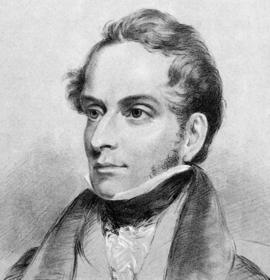
John Thomas Barber Beaumont was a British army officer, painter, author and philanthropist. He was successful in the insurance business, and projected a settlement in South America
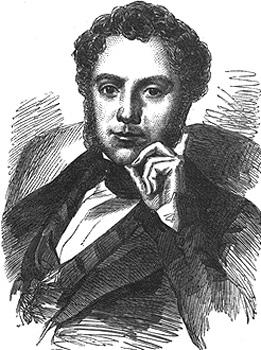
Edward Burton was a British Army Surgeon and zoologist. He was also a magistrate for Kent. He described several species of bird, for some of which he is the valid binomial authority. Burton may have been the author of an 1821 paper relating to Pelecanus aquilus Linn. on Ascension Island. He has been identified as the man who in 1835 displayed a specimen of a species of Ratelus at the Zoological Society of London. He has also been identified as the man who in 1836 communicated a description of Pipra squalida, a Himalayan flowerpecker, to the Zoological Society
William John Broderip was an English lawyer and naturalist. Broderip throughout his life was an enthusiastic collector, particularly of shells. His collection was ultimately purchased by the British Museum. He was elected a Fellow of the Linnean Society in 1824, of the Geological Society in 1825, and of the Royal Society on 14th February 1828. In co-operation with Sir Stamford Raffles he aided the formation of the Zoological Society of London, of which he was one of the original Fellows
Joshua Brookes was a British anatomist and naturalist. Brookes studied under William Hunter, William Hewson, Andrew Marshall and John Sheldon in London. He then attended the practice of Antoine Portal and other eminent surgeons at the Hotel-Dieu de Paris.
Brookes became a teacher of anatomy in London, and the founder of the Brookesian Museum of Comparative Anatomy.
Brookes was the first to place the Cheetah in its own genus, which is established in 1828 as Acinonyx. The generic name, Brookesia, in in honour of Joshua Brookes
Architect of London Zoo. By the end of 1829, Burton had completed London Zoo, which had opened in April 1828