Person
·
fl 1991
Person
·
1916-1988
Henry Gwynne Vevers was a marine biologist and intelligence officer. Son of Geoffrey Marr Vevers, Superintendent at London Zoo. Vevers attended St Paul's School, then Magdalen College, Oxford. He travelled to Greenland with the Oxford University Exploration Club in 1936 and to the Faeroe Island in 1937 to collect mouse and gannet statistics. From the Faeroes and Iceland in 1937-39 he reported to the naval intelligence division of the Admiralty on the German ships which were charting deep-water channel and continuing intelligence gathering for several decades. From 1945-55 he carried out research at the Marine Biological Laboratory at Plymouth, publishing his first book, The British Seashore, in 1954. He edited the Journal of Zoology and the Zoological Record. He was curator of the aquarium at London Zoo and vice-president of the Linnean Society
Person
·
1890-1970
Honorary Parasitologist and Superintendent at ZSL London Zoo
Person
·
1890-1970
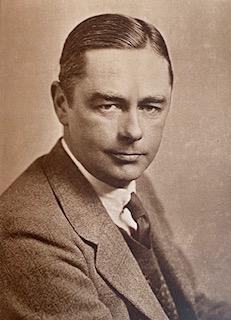
Born on 20th September 1890 at Hereford, he was the younger son of Henry Vevers, surgeon of Hereford, and he received his early education there before entering St Thomas' Medical School in 1909. On the outbreak of war in 1914, he went to Frances as a dresser with the British Red Cross Society but, after being sent back to qualify in 1915, he again served as Captain RAMC throughout the war in France until 1919, qualifying for the 1914-15 Star. He served as a casualty officer at St Thomas' and in 1919 became assistant helminthologist at the London School of Tropical medicine until 1923, having been awarded a Beit Memorial Fellowship during the years 1920-22.
He was honorary parasitologist to the Zoological Society of London from 1919 to 1921, and in 1921 was a member of the Filariasis Commission to British Guiana. In 1923 he was appointed Superintendent to the Zoological Society of London which he held until his retirement in 1948, receiving the Society's Silver Medal in 1942. In 1947 the Zoological Society of Glasgow and the West of Scotland awarded him its gold medal and he was also an honorary member of the Zoological Societies of Philadelphia and of Ireland. When the Society decided to start the collection at Whipsnade, he was chief assistant to the then Secretary, Sir Philip Chalmers Mitchell and he built a house for himself there as he had to do most of the fieldwork.
He paid several visits to Moscow where he succeeded in obtaining a number of rare animals and where he became a great admirer of the USSR, editing the Anglo-Soviet journal from 1939-1946.
As a student at St Thomas' he came a close friend of P H Mitchiner, who later became an honorary Fellow of the Zoological Society of London, and in 1946 Vevers was elected a Fellow of the College as a member of twenty or more years standing.
Vevers wrote numerous scientific papers and also books on natural history for children, on which subject he regularly broadcast in the BBC 'Children's Hour'.
He died on 9th January 1970 at his home Springfield, Whipsnade, and was survived by his wife and family
Person
Corporate body
·
fl 1945
Corporate body
·
1893
Person
·
fl 19th century
Person
·
1807-1873
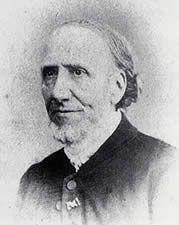
Jules Pierre Verreaux was a French botanist and ornithologist, and a professional collector and trader in natural history specimens. Verreaux worked for the family business, Maison Verreaux, established in 1803 by his father, Jacques Philippe Verreaux, which was the earliest known company that dealt in objects of natural history. The company funded collection expeditions to various parts of the world
Person
·
fl 19th century