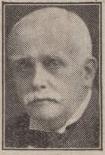
Ernest William MacBride was a marine biologist and one of the last supporters of Lamarckian evolution. He served on the Council of the Zoological Council of London for over thirty years and acted as Vice-President
Gladwyn Kingsley Noble was an American zoologist who served as the head curator for the Department of Herpetology and the Department of Experimental Biology at the American Museum of Natural History. Noble is the taxon author of 20 new species of reptiles. A species of lizard, Anolis noblei, is named in his honour. Also, a subspecies of lizard, Sphaerodactylus darlingtoni noblei, is named in his honor
Marie Phisalix was a French scientist who researched snake venom and antidotes. In 1910 she joined the National Museum of Natural History, where she led the laboratory of ichthyology and herpetology. She studied the comparative anatomy of the organs that create venom as well as the pathology of their delivery
Albert Edwin Hayward Pinch was a General Surgeon and Radiologist. He was resident Medical Superintendent and General Director of the Radium Institute
Andrew Frederick Weatherby (Anthony) Beauchamp-Procter was a South African airman and a recipient of the Victoria Cross. He was South Africa's leading ace of the First World War, being credited with 54 aerial victories
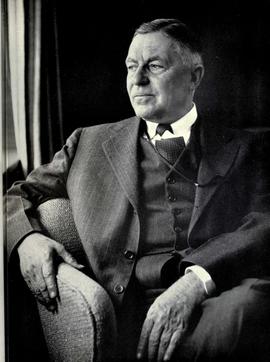
Alexander Grant Ruthven received a PhD in zoology from the University of Michigan in 1906. He worked as a professor, director of the University Museum, and Dean. He became the President in 1929. The work of Ruthven on the familiar garter snakes, published in 1908, may be regarded as founding an essentially new school of herpetology in the United States. Ruthven described and named 16 new species of reptiles. Ruthven is commemorated in the scientific names of seven reptiles: Geophis ruthveni, Holbrookia maculata ruthveni, Lampropeltis ruthveni, Lepidoblepharis ruthveni, Macropholidus ruthveni, Masticophis schotti ruthveni, and Pituophis ruthveni
Karl Patterson Schmidt was an American herpetologist. From 1916 to 1922, he worked as scientific assistant in herpetology at the American Museum of Natural History in New York, under the American herpetologists Mary Cynthia Dickerson and Gladwyn K Noble. He made his first collecting expedition to Puerto Rico in 1919, then became the assistant curator of reptiles and amphibians at the Field Museum of Natural History in Chicago in 1922. From 1923 to 1934, he made several collecting expeditions for that museum to Central and South America, which took him to Honduras, Brazil and Guatemala. In 1937, he became the editor of the herpetology and ichthyology journal Copeia, a post he occupied until 1949. He became the chief curator of zoology at the Field Museum in 1941, where he remained until his retirement in 1955. From 1942 to 1946, he was the president of the American Society of Ichthyologists and Herpetologists. In 1953, he made his last expedition, which was to Israel