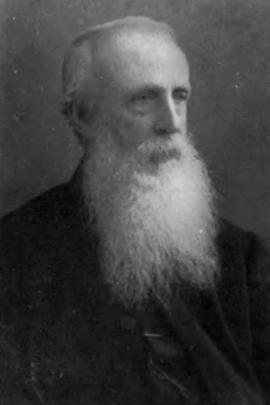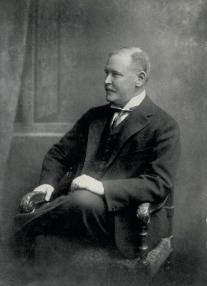
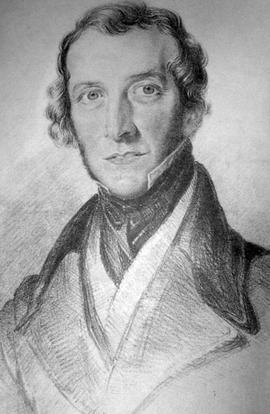
Frederick William Hope was an English clergyman, naturalist, collector and entomologist, who founded a professorship at the University of Oxford to which he gave his entire collection of insects in 1849 (the Hope Entomological Collections, with around 3.5 million specimens). He described numerous species and was a founder of the Entomological Society of London in 1833. He was a founder members of the Zoological Society of London. Hope collaborated with many naturalists of the period, including Charles Darwin
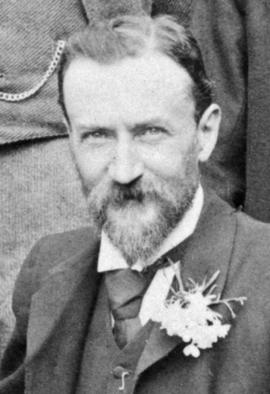
Arthur Gardiner Butler was an English entomologist, arachnologist and ornithologist. He worked at the British Museum on the taxonomy of birds, insects and spiders. He was also appointed assistant librarian at the British Museum in 1879
Octavius Pickard-Cambridge was an English clergyman and zoologist. His main interest was in spiders, though he wrote also on birds and lepidoptera. He published extensively on spiders between 1859 and his death in 1917, including in the the journal of the Zoological Society of London. He became a world authority of spiders, describing a considerable number of new species including the Costa Rican redleg tarantula and the Sydney funnel-web spider
Thomas de Grey, 6th Baron Walsingham, was an English politician and amateur entomologist. He was a keen lepidopterist, collecting butterflies and moths from a young age, and was particularly interested in Microlepidoptera. After his purchase of the Zeller, Hofmann and Christoph collections, his collection contained over 260,000 specimens. He donated it to the Natural History Museum, along with his library of 2,600 books. He was elected a fellow of the Royal Society in 1887, and was a member of the Entomological Society of London, serving as President on two occasions
Arthur Grote was an English colonial administrator. He entered the Bengal Civil Service in 1834, where as a civil servant he was employed in Bengal from 1834 to 1868 and was commissioner and member of the Board of Revenue, Calcutta, 1861-8. He also served as President of the Asiatic Society of Bengal, 1859-62 and 1865, and President of the Royal Agricultural Society of India. On his return to England in 1868 he became a prominent member of the Linnean Society of London and Royal Asiatic Society, and wrote many papers on natural history subjects
Andrew Dickson Murrary was a Scottish lawyer, botanist, zoologist and entomologist. Murray studied insects which caused crop damage, specialising in coleoptera. In botany, he specialised in Coniferae. He served as president of the Royal Physical Society of Edinburgh during 1858-59. Murray was a prominent opponent of the Darwin-Wallace model of natural selection. Murray believed that hybridisation was a better explanation for mimicry than natural selection. In 1860, Murray reviewed Darwin's On the Origin of Species in the Proceedings of the Royal Society of Edinburgh
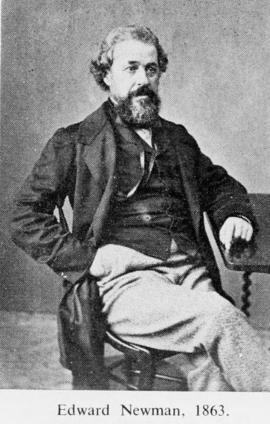
Edward Newman was an English entomologist, botanist and writer. He was a founder member of the Entomological Club. In 1832 he was elected as editor of the club's journal, The Entomological Magazine, and the following year became a Fellow of the Linnean Society and one of the founder members of the Entomological Society of London
Professor Edward Hindle was a British biologist and entomologist who was Regius Professor of Zoology at the University of Glasgow from 1935 to 1943. He specialised in the study of parasites. He was founder of the Zoological Society of Glasgow. In 1943 he was appointed the first Scientific Director of the Zoological Society of London
Harold Maxwell-Lefroy was an English entomologist. He served as a Professor of Entomology at Imperial College London and as the second Imperial Entomologist to India. He left India after the death of two of his children from insect-borne diseases. He worked on applied entomology and initiated experiments on the use of chemicals to control insects. A formula he developed was utilised to save Westminster Hall from destruction by wood-boring beetles, while others were used to control lice in the trenches during the First World War. The success of his chemicals led to increased demand and the founding of Rentokil, a company for insecticide production. Maxwell-Lefroy's students included Evelyn Cheesman who took up a position at the insect house in London Zoo from 1919. He was killed while experimenting on fumigants to control insects.
Franz Werner was an Austrian zoologist and explorer. Specialising as a herpetologist and entomologist, Werner described numerous species and other taxa of frogs, snakes, insects and other organisms