
Persona
·
fl 1868
Persona
·
1825-1892
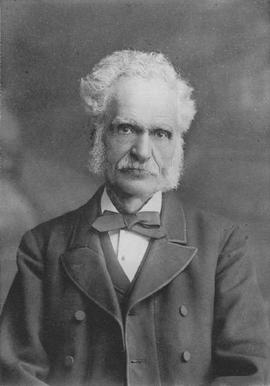
Henry Walter Bates was an English naturalist and explorer who gave the first scientific account of mimicry in animals. He was most famous for his expedition to the rainforests of the Amazon with Alfred Russel Wallace, starting in 1848. Wallace returned in 1852, but lost his collection on the return voyage when his ship caught fire. When Bates arrived home in 1859, he had sent back over 14,712 species (mostly insects) of which 8,000 were (according to Bates) new to science. Bates wrote up his findings in the work The Naturalist on the River Amazons
Persona
·
1872-1953
Gilbert William Bayes was an English sculptor. His art works varies in scale from medals to large architectural clocks, monuments and equestrian statues
Persona
·
c1818-1873
Charles John Bayley was a colonial administrator and Governor of the Bahamas
Persona
·
1858-1925
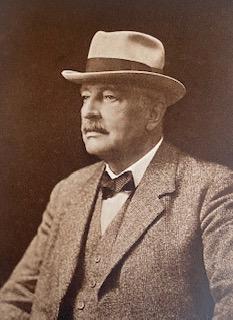
Frank Evers Beddard was born in Dudley, Worcestershire, the son of John Beddard. He was educated at Harrow and New College, Oxford.
Beddard was naturalist to the Challenger Expedition Commission from 1882-1884. In 1884 he was appointed prosector at the Zoological Society of London. He was also Vice-Secretary at the Society.
He became lecturer in biology at Guy's Hospital, examiner in zoology and comparative anatomy at the University of London, and lecturer in morphology at Oxford University.
Apart from his publications on wide-ranging topics in zoology such as isopoda, mammalia, ornithology, zoogeography and animal coloration, Beddard became noted as an authority on the annelids, publishing two books on the group and contributing articles on earthworms, leeches and the nematoda for the 1911 Encyclopaedia Britannica. Beddard contributed biographies of zoologists William Henry Flower and John Anderson for the Dictionary of National Biography. He was the author of volume 10 (mammalia) of the Cambridge Natural History. Beddard's olingo (Pocock, 1921) is named after him.

Persona
·
1858-1940
Herbrand Arthur Russell, 11th Duke of Bedford, was and English politician and peer. He was the son of Francis Russell, 9th Duke of Bedford, and his wife Lady Elizabeth Sackville-West, daughter of George Sackville-West, 5th Earl De La Warr.
He was President of the Zoological Society of London from 1899 to 1936, and was concerned with animal preservation throughout his life. He was instrumental in saving the milu (or Pere David's deer), which was already extinct by 1900 in its native China. He acquired a few remaining deer from European zoos and nurtured a herd of them at Woburn Abbey. He gifted Himalayan tahr to the New Zealand government in 1903.
Persona
·
fl 1866
Persona
·
1804-1893
George Bennett was an English-born Australian physician and naturalist, winner of the Clarke Medal in 1890. In 1835 Bennett published in the Transactions of the Zoological Society of London, vol. 1, pp. 229-58, "Notes on the Natural History and Habits of the Ornithorhyncus paradoxus, Blum," one of the earliest papers of importance written on the platypus
Persona
·
1846-1919
Admiral Charles William de la Poer Beresford was a British admiral and Member of Parliament
Persona
·
fl 1868